
In 1989, the theatre department at Southwest Missouri State University (now Missouri State University) staged Larry Kramer’s The Normal Heart, a play about the HIV/AIDS crisis and activism in the gay community. Backlash from local religious organizations and concerned citizen groups in Springfield, MO grew to a fever pitch, resulting in an arsonist’s incineration of a student-actor’s home on opening night. In the small minds of hateful people, to make theatre is to make trouble. But, as the late congressman and civil rights activist, John Lewis, made clear: some trouble is good and necessary for drawing attention to injustices and inequities in society.
Southern Rapture by Eric Coble makes for a humorous—if perfunctory—attempt to present the good trouble that theatre can rouse by stirring up moralizing sentiments regarding “appropriate” art. But Coble dodges the very real dangers that can accompany this kind of artistic expression. Based on the true story of a 1996 production of Angels in America at the Charlotte Repertory Theatre, which was met with vehement and vocal opposition, Coble frames the events of his play in caricature; reducing those threats of censorship, litigation, and even violence thrown about to mere humorous hyperbole. He also lifts the play from its historical moorings and real-world stakes, opting instead to land the story in a field of folksy southern dandelions who are blown over by a whisper of a breeze. And while we are only thirty years removed its setting, the resulting effect on audiences today is one of ambivalence. Amidst Coble’s genuinely funny exaggerations of Southern culture lies the dread of knowing it is also a harbor for the hate and bigotry that threatens so many artists and activists today.
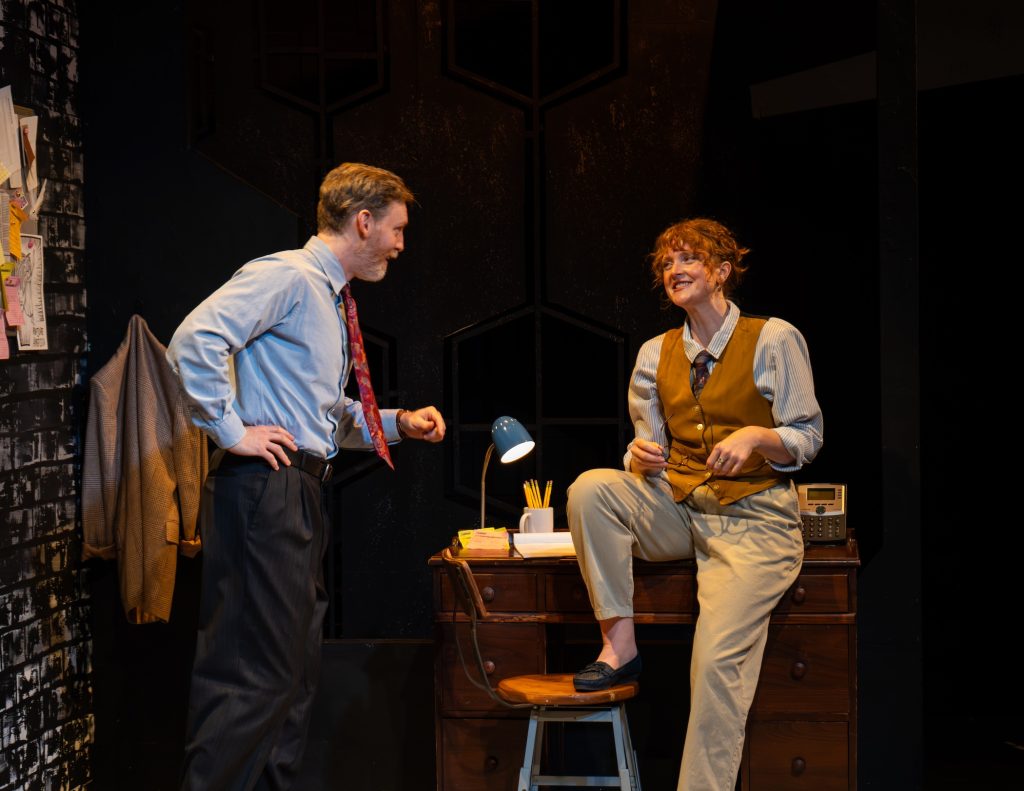
Southern Rapture pits artistic expression against civic governance when the local theatre plans to open the Pulitzer Prize-winning play, Rapture in America (an unsubtle nod to Angels in America). The over-stretched but always sanguine director Majorie Winthrop (Shannon Leigh Webber), along with her Energizer Bunny of a producer, Donald Sherman (Michael Stejskal), must navigate a swelling tide of opposition from their community stemming from the play’s focus on its gay characters and the staging of a nude scene. Mayor Winston Paxton (Teddy Boone) and a cadre of religious and business leaders attempt to thwart the production through legal challenges and political maneuvering.
As opening night approaches, Majorie is faced with the difficult decision to either remove the nude scene—which would bring a lawsuit from the playwright, Anton Finewitz (Andrew Bosworth)—stage the show in its entirety—and risk the loss of public funding for the theatre and other arts organizations—or hope that another solution suddenly appears at the eleventh hour (spoiler: it does not). Questions about censorship, good taste, freedom of expression, and moral responsibility all swirl around the events of the play. And Coble ensures that no one occupies the high ground in the debate. The shortcomings of each character contribute complications to the conflict, but there is little question that we should place our sympathies with Majorie, Donald, and the actors staging Rapture in America.
The questions Coble presents in Southern Rapture are significant and hold deep relevance for arts organizations today. But wherever a matter of significant gravity appears, Coble drives the play toward levity rather than engage with the weighty realities facing his characters. For example, the initial criticism toward Rapture in America is couched in its presentation of the “homosexual agenda,” but as things continue to unfold, the primary focus of community outrage—and comedic turns of phrase—shift toward the staging of a nude scene and the actor’s anatomy exposed on stage. In short, theatre’s moral responsibility to platform voices of the marginalized and oppressed is overshadowed by the possible appearance of a penis—providing Coble with ample opportunity to throw as many euphemistic turns of phrase into the dialogue as he can write. Perhaps shifting the nude scene into the central conflict of the play was a result of the fact that there are no gay characters to speak about the importance a play that features the deadly impact of the HIV/AIDS crisis on the gay community.
The satirical humor of Southern Rapture targets the small-minded cultural conservatism of the South. But as the play progresses, the effort to maintain humorous levity undercuts the serious stakes with which the characters must grapple. Majorie and Donald face the prospect of losing their jobs (and their ability to support their families), the cast of Rapture in America fears for their safety, and the survival of the theatre is very much in the balance. For a play that makes no overt connection to the historical events that inspired its story, it is confusing why Coble would not deviate from events in the past to infuse his satire with more punch in the present rather than devolve it into silliness.
The good news is that the cast and creative team of Southern Rapture intensify the satirical bite—where they can—with their expert interpretations of the play’s many characters. Like an episode of Veep made for theatre nerds, director Jason Palmer sets a tone and tempo for the performance that makes for joyously fun situations and unpredictably hilarious character interactions. The supporting ensemble of Andrew Bosworth, Mary Anne Bowman, Jordan Gleaves, and Jenny Hoppes each breathe uniquely engaging personalities into the various characters they play throughout the play, so much so that it is challenging to identify a single moment to highlight for each actor as their work is so consistently stellar across the arc of the play. Their efforts fill the world of Southern Rapture with a rich complexity, swelling the issues addressed in the play to the fullness they require. Though there are issues with the play’s treatment of its own subject matter, Tin Drum Theatre’s expert handling of the material makes for an enjoyable evening.
Souther Rapture is recommended and runs through June 28th at Theater Wit (1229 W Belmont). Tickets are available at tindrumtheatre.com.